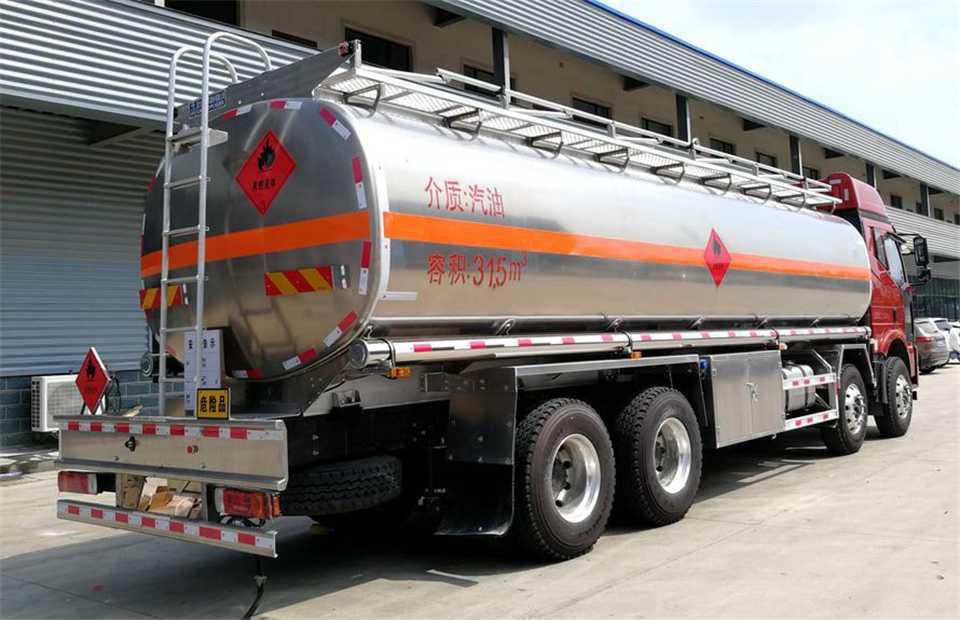
Importing a simplified oil tanker truck to Africa requires understanding three critical factors—tariff structures, PVoC certification, and cargo lashing regulations—that directly impact your project timeline and budget. This guide walks you through every step, from market selection to port clearance, using real data from Nigeria, Kenya, and Tanzania.
1. Why Africa Buyers Choose Simplified Oil Tank Truck Configurations
Let's be honest—buying a tanker truck for your African operation isn't straightforward. You're facing three real challenges right now that most procurement managers encounter when sourcing from China suppliers.
Transition: Understanding the market drivers behind simplified tanker truck configurations helps you make a confident purchasing decision aligned with your regional requirements.
1.1 Heavy Import Tariffs & Budget Pressure in Nigeria, Kenya, Tanzania
The tariff structure alone will shock you if you're not prepared. Nigeria charges 20% import duty plus 7% surcharge on vehicle CIF value. Kenya adds 35% import duty and then stacks another 20% excise tax. Tanzania applies similar penalties if your CoC documentation is incomplete—15% of cargo value as a fine.
Here's the math: a standard 30 cubic meter oil tank truck costs $45,000 FOB China. After tariffs, you're looking at an additional $15,000-$20,000 in import taxes alone. This is why procurement managers across Nigeria, Kenya, and Tanzania look for simplified vacuum tanker truck for sale suppliers in China who offer reduced configurations.
The simplified version costs $32,000-$38,000 FOB—that's 12-15% cheaper upfront. Combined with lower tariffs on smaller tanks, your total landed cost drops significantly.
Transition: Beyond tariffs, the extreme operating environment across Africa demands specific technical adaptations that standard tanker trucks cannot provide.
1.2 Harsh Operating Environment—Heat, Dust & Corrosion Challenges
Africa's climate is brutal on equipment. Sand storms, extreme heat, and poor road conditions wear down standard trucks fast. Aluminum tank corrosion accelerates in high temperatures mixed with salt-laden air and dust. Your truck needs to survive 500,000+ km between major repairs.
This is why we recommend 6mm aluminum alloy tanks with specialized corrosion-resistant coatings. Some buyers choose 304 stainless steel reinforcement in critical areas—it costs 8-12% more but extends tank life by 30-40% in harsh African environments.
Standard European-spec trucks don't account for these factors. A simplified fuel tanker truck for sale wholesaler in China who understands African durability needs will pre-apply the right coatings and suggest longer maintenance intervals.
Transition: Equally important is the mandatory compliance framework—missing one document can delay your customs clearance by weeks and trigger significant penalties.
1.3 Mandatory PVoC/CoC Certification Requirements by Country
Tanzania and Kenya require PVoC—Pre-Export Verification of Conformity. It's not optional. A Certificate of Conformity must accompany your shipment. If it's missing, the port rejects your truck and charges 15% of cargo value as penalty.
Nigeria switched from pre-export inspection to destination inspection in 2024. Your CoC is verified after arrival, which means clearance takes 7-10 days instead of 3-5. This shift catches many importers off guard.
Getting certification right is critical. PVoC pre-export routes (Kenya and Tanzania) take 5-10 working days and cost $500-$1,500. Missing this window adds weeks to your project timeline.
Transition: Now that we've identified the core challenges, let's walk through the exact technical specifications and configuration options available to you.
2. Standard vs. Simplified Configuration—Technical Specifications Breakdown
The configuration you choose determines not only your upfront costs but also your certification pathway, maintenance requirements, and long-term operational costs in African markets. Let's break down your actual options.
Transition: The configuration you choose determines not only your upfront costs but also your certification pathway, maintenance requirements, and long-term operational costs in African markets.
2.1 Standard 25-30 Cubic Meter Aluminum Tank Truck for Middle East & Europe
Our standard configuration is built for Middle East and European markets. It features a Dongfeng Tianlong chassis with Cummins 315 horsepower engine (fuel consumption: 38L per 100km).
The tank is 6mm aluminum alloy, holds 27.5-30 cubic meters, and includes two European filler ports, one bottom valve, one discharge outlet, waste gas recovery system, anti-overflow probe with socket, folding guardrails, static electricity reel, and a complete tool kit.
This version costs $45,000-$50,000 FOB China and requires CE certification plus full PED compliance for Europe. CE certification takes 4-8 weeks and costs extra $2,000-$5,000.
Transition: The simplified African version strips away non-essential components while maintaining the core reliability that your operation demands.
2.2 Simplified 15-20 Cubic Meter Configuration for Africa—Lower Cost, Same Reliability
For Africa, we simplify without compromising quality. The tank stays 6mm aluminum. You keep two European filler ports, one bottom valve, and one discharge outlet—the parts you actually use. You lose the folding guardrails and complete tool kit (no space for them on African job sites anyway).
Electrical gets simplified too—no automatic level monitoring, just basic liquid sensors. You might reduce tank size to 15-20 cubic meters depending on your market. This simplified config costs $32,000-$38,000 FOB China.
The real savings? No CE certification required. Instead, you go through PVoC or CoC routes in Tanzania and Kenya (5-10 working days, $500-$1,500). This saves 4+ weeks and $1,500-$3,500 per truck compared to standard European models.
Transition: Certification requirements differ significantly between these two configurations, which directly affects your import timeline and total project cost.
2.3 Certification Pathways—CE vs. PVoC vs. CoC: Which One Do You Need?
CE Certification (Europe only): 4-8 weeks processing + $2,000-$5,000 cost. Requires EN 1090-1 (steel/aluminum structures) and PED 2014/68/EU compliance. Only for European buyers.
PVoC (Pre-Export Verification of Conformity): Kenya and Tanzania route. Three options:
Route A (occasional exporters): 5-10 working days, $500-$1,000
Route B (frequent exporters): 7-15 working days, $800-$1,200
Route C (high-volume manufacturers): ongoing license, $1,200-$1,500
CoC (Certificate of Conformity): Nigeria uses destination inspection. You submit CoC after arrival. Requires Intertek or SGS pre-approval—1-2 weeks advance, $600-$1,200.
VOC (Verification of Conformity): Ivory Coast, Central African Republic. Similar to PVoC but separate system. Budget 5-7 working days, $700-$1,300.
The smart move? Get Intertek or SGS pre-approval 2-3 weeks before shipment. This eliminates 90% of port delays.
Transition: With the technical picture clear, your next decision is selecting the right tanker truck size and configuration for your specific African market—Nigeria, Kenya, or Tanzania.
3. Step-by-Step Selection Guide—Matching Tanker Truck Size to Your Target Market
Each African country has distinct tariff structures, port infrastructure, and regulatory timelines that should guide your truck selection and procurement strategy. Let me show you the real numbers.
Transition: Each African country has distinct tariff structures, port infrastructure, and regulatory timelines that should guide your truck selection and procurement strategy.
3.1 Nigeria Import Route—Lagos Port, 20-25 Cubic Meter Tank, Destination Inspection Model
Nigeria charges 20% import duty + 7% surcharge = 27% total. On a $45,000 base truck, that's $12,150 in taxes. Smaller simplified trucks (20-25 cubic meters, $38,000-$42,000 FOB) cut this to $10,260-$11,340.
Spec for Nigeria: 20-25 cubic meters, basic European fittings, corrosion-resistant coating upgrade. Lagos port clearance takes 7-10 days after destination inspection.
Ocean freight from Shenzhen/Shanghai to Lagos: approximately $150 per cubic meter for LCL, or $3,000-$4,000 FCL depending on forwarder. Port handling and customs brokerage add $800-$1,200.
Your total landed cost: $45,000-$52,000 all-in.
Transition: Kenya's market operates under a stricter tariff structure but offers faster PVoC pre-export processing—a key advantage if you can plan ahead.
3.2 Kenya Import Route—Mombasa Port, 12-15 Cubic Meter Tank, PVoC Route B Pre-Export
Kenya's duty is steeper: 35% import duty + 20% excise tax = 55% total. This is the highest tariff in East Africa. However, PVoC Route B pre-approval (for repeat exporters) cuts clearance time to 3-5 days if documents are pre-approved.
Spec for Kenya: 12-15 cubic meters works better on Kenyan roads (wider use in municipal/rural areas). Price: $32,000-$36,000 FOB.
Shipping: $1,600 per 20-foot container or $1,900 per 40-foot high cube to Mombasa. Smart move: ship two 12-15 cubic meter tanks in one 40-footer. Each truck costs $950-$1,000 in freight instead of $2,000-$3,000.
Your total landed cost: $42,000-$50,000 all-in, but faster clearance (3-5 days with pre-approved PVoC).
Transition: Tanzania presents the most straightforward entry route through its PVoC Route A program, designed specifically for occasional exporters with flexible timelines.
3.3 Tanzania Import Route—Dar es Salaam Port, 10-12 Cubic Meter Tank, PVoC Route A Option
Tanzania's duty is moderate (no official excise tax like Kenya), but the mandatory PVoC CoC requirement is strict. Missing CoC = 15% penalty + destination inspection.
Spec for Tanzania: 10-12 cubic meters fits well with local municipal needs. Price: $28,000-$33,000 FOB.
PVoC Route A is the right fit for occasional exporters. Timeline: 5-10 working days if you submit complete documentation to Intertek Tanzania before shipment.
Shipping to Dar es Salaam: $1,500-$1,800 per 20-foot container. Ocean freight takes 25-35 days from Shenzhen depending on routing.
Your total landed cost: $35,000-$42,000 all-in, with Route A timeline well-understood upfront.
Transition: Smart procurement teams often use a container optimization strategy—shipping two smaller-capacity tankers together—to dramatically reduce per-unit logistics costs and improve equipment deployment flexibility.
3.4 Container Loading Strategy—20ft vs. 40ft High Cube Optimization & Port-to-Site Delivery
Here's where most buyers lose money: one large oil tank truck fills an entire 20-foot container. At $1,600-$1,900 shipping cost, you're paying premium per-unit freight.
Better option: two 12-15 cubic meter tanks fit in one 40-foot high cube with proper lashing. Cost? $1,900-$2,400 for the full container. That's $950-$1,200 per truck—45-50% savings.
Lashing requirements follow IMO/ILO/UNECE standards. Budget $200-$300 for professional lashing equipment and documentation per container.
From port to your site: Mombasa to Nairobi (4-6 hours), Lagos to inland locations (2-4 days by road), Dar es Salaam to regional centers (1-3 days). Most buyers hire a clearing and forwarding agent (CFA) to handle this—cost: $400-$800.
Transition: Now that you've selected the right truck for your market, the critical next step is understanding the exact documentation requirements and procurement timeline to avoid costly delays.
4. Procurement Checklist & Documentation Timeline—Avoid Common Customs Delays
Your success hinges on three critical elements: having the right documents prepared, understanding country-specific certification routes, and managing payment terms aligned with production milestones.
Transition: Your success hinges on three critical elements: having the right documents prepared, understanding country-specific certification routes, and managing payment terms aligned with production milestones.
4.1 Complete Documentation Package from China—HS Codes, CoC Pre-Approval & Quality Certificates
Your document package must include:
Commercial invoice with correct HS code (870590—Special Purpose Motor Vehicles)
Packing list matching invoice exactly (volume, dimensions, weight)
Certificate of Origin (Made in China)
CCC Exemption Statement—oil tank trucks don't require China Compulsory Certification, but write formal proof
Quality inspection report showing: 6mm aluminum tank thickness verification, welding strength tests, corrosion coating spec (ASTM B117 salt-spray test minimum 500 hours)
Pre-approval PVoC/CoC from Intertek, SGS, or TÜV (1-2 weeks before shipment)
Common mistake #1: HS code mismatch between invoice and packing list. Customs sees this as fraud. Result: 5-7 day port hold.
Common mistake #2: Missing coating certificate. African inspectors check for corrosion protection. No ASTM B117 report = destination inspection or rework order.
Common mistake #3: CoC delay on Nigeria destination inspection. Pre-export CoC doesn't count anymore. Budget 3-5 days after arrival for re-inspection.
Quick Reference Table: Documentation Checklist by Country
Document | Nigeria | Kenya | Tanzania |
|---|---|---|---|
Commercial Invoice (HS 870590) | ✓ | ✓ | ✓ |
Packing List | ✓ | ✓ | ✓ |
Certificate of Origin | ✓ | ✓ | ✓ |
CCC Exemption Statement | ✓ | ✓ | ✓ |
Quality/Coating Report (ASTM B117) | ✓ | ✓ | ✓ |
Pre-Export CoC/PVoC | After arrival | Before shipment | Before shipment |
Processing Time | 7-10 days post-arrival | 3-5 days pre-approved | 3-5 days pre-approved |
Cost | $600-$1,200 | $800-$1,200 | $500-$1,000 |
Transition: Document mismatches are the #1 reason for port delays—securing Intertek or SGS pre-approval before shipment cuts your clearing time from 10 days to 3-5 days.
4.2 Payment Structure, Government Tender Requirements & Currency Risk Management
Standard payment: 30% deposit when you sign the contract. This starts production immediately. The remaining 70% is due before delivery—typically 25-30 days after deposit.
Most Chinese suppliers accept T/T (bank transfer) or Letter of Credit (L/C). Government procurement? It usually requires L/C payment. Notify your supplier early if this applies—L/C arrangement takes 2-3 weeks.
Currency risk: Don't fix prices in Nigerian Naira, Kenyan Shilling, or Tanzanian Shilling. Exchange rates fluctuate 5-15% monthly. Get quotes in USD and lock the rate at contract signing.
Government tender specs: If you're buying for a municipal procurement, the tender document will specify:
Minimum emission standard (Euro 5 for Kenya/Tanzania)
Tank capacity tolerance (±5% acceptable)
Warranty period (1-2 years typical)
After-sales service commitment
Local spare parts availability
Budget 2-3 weeks to respond to a government RFQ. Include copies of ISO 9001 certificate, factory test reports, and reference customer list.
Transition: Your complete procurement timeline—from contract signing to port clearance—typically spans 16-17 weeks; detailed milestone tracking ensures zero surprises and keeps your project on budget.
4.3 Complete Timeline: 16-17 Weeks from Contract to African Port Delivery & Clearance
Here's your week-by-week roadmap:
Week 1-2: Sign contract + transfer 30% deposit → Factory starts production Week 3-6: Tank assembly + frame welding + quality inspection → Get thickness/coating test reports ready Week 6-7: Submit Intertek/SGS pre-approval request + initiate PVoC documentation Week 8: Port customs filing + HS code declaration + CCC exemption letter submitted Week 9: Truck loaded in container + final lashing inspection + customer pays 70% balance Week 10-15: Ocean freight (25-35 days depending on routing/weather) Week 16-17: Port arrival + destination inspection (Nigeria) OR port clearance with pre-approved CoC (Kenya/Tanzania)
Buffer recommendation: Always add 2-3 weeks for unexpected customs review or missing documents. Plan your project launch for week 18-20 after initial contract signing.
Conclusion & Next Steps
Start your procurement process today by confirming your target market (Nigeria, Kenya, or Tanzania), specifying your tank capacity requirements (10-25 cubic meters), and requesting a pre-approval CoC quote from an authorized Intertek or SGS partner. This single decision cuts your total project timeline by 30-40% and eliminates the most common customs delay scenarios.
A reliable simplified fuel tanker truck supplier in China will handle these details proactively. Ask your supplier to provide:
Factory test reports with ASTM B117 coating verification
PVoC pre-approval letter (Intertek/SGS signed)
Reference contact from 3-5 previous African buyers
Warranty documentation and after-sales service commitment
Your investment today in proper documentation and partner selection pays dividends in faster clearance, lower tariff exposure, and equipment that actually survives African operating conditions.