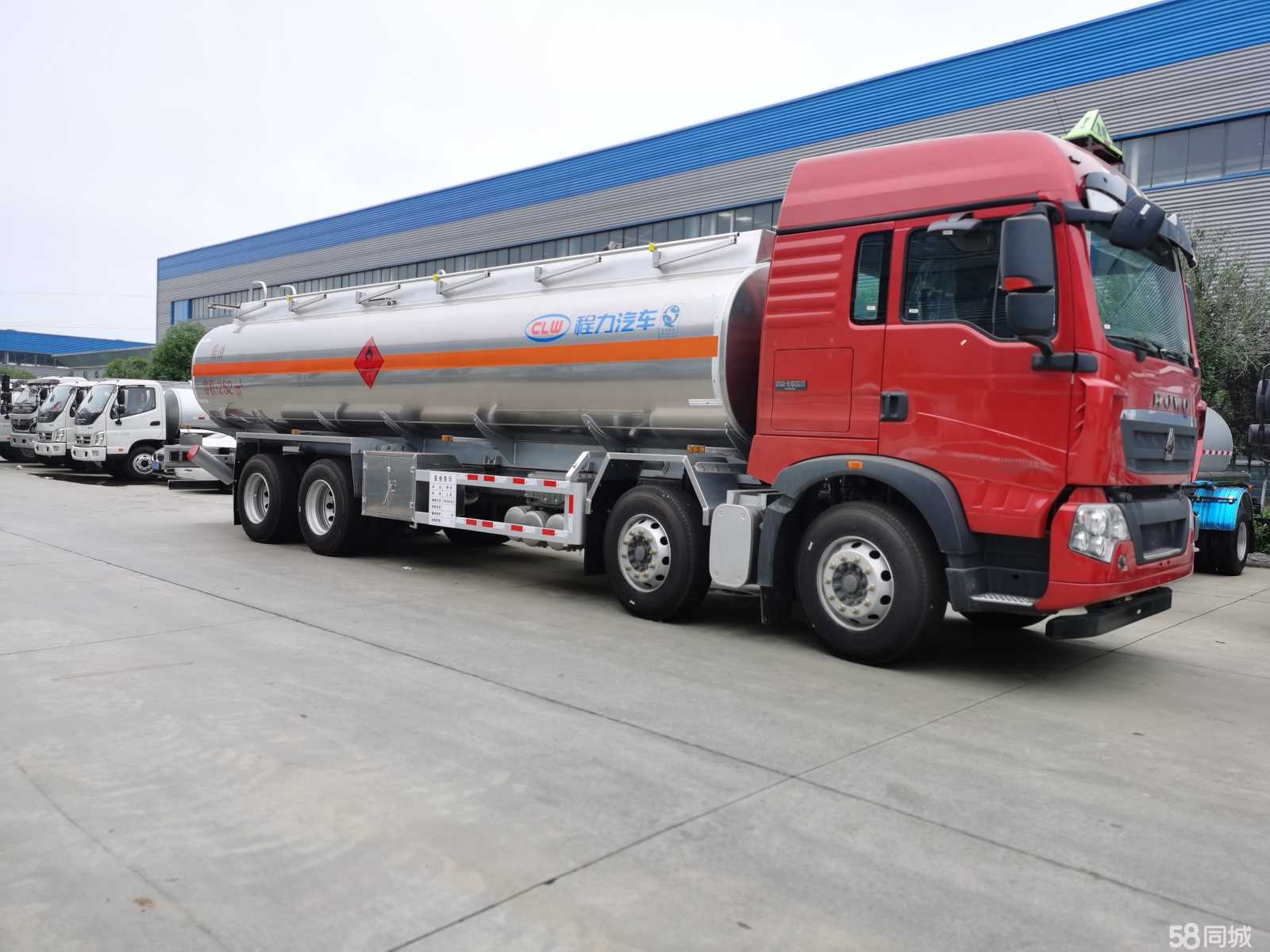
When choosing between aluminum 5083, stainless steel 304, and carbon steel for your tanker truck purchase, understanding material performance across different climates can save you $30,000+ in total cost of ownership over 10 years. Most procurement managers make this decision based on upfront price alone. That's where they lose money.
1. Why Material Selection Fails Most Tanker Truck Buyers
Your tanker truck isn't just equipment. It's a 10-20 year investment sitting in heat, humidity, and salt spray. Pick the wrong material, and you're locked into constant repair cycles. Pick the right one, and it runs maintenance-free.
Here's the core problem: three materials. Three completely different failure patterns. And almost nobody understands them until it's too late.
1.1 The 10-20 Year Environmental Challenge
Procurement managers in Southeast Asia, the Middle East, and Africa face the same tough question: which material can survive their specific climate without becoming a money pit?
Tropical regions hit you with 25-35°C heat plus 70-90% humidity. Coastal areas add salt spray. Desert markets throw 35-50°C temperatures and constant sand abrasion. Each environment attacks different materials in different ways.
Your tanker truck isn't just equipment—it's a decades-long investment exposed to heat, humidity, and salt. Most buyers miss this reality until maintenance costs exceed $500-1,500 annually. That's when they realize they chose wrong.
1.2 Three Materials. Three Different Failure Patterns.
Aluminum 5083 creates a natural oxide layer that heals itself when scratched. No paint needed. In high-humidity environments, this self-repair mechanism is a game-changer.
Stainless Steel 304 sounds perfect. But it has a hidden weakness: pitting corrosion starts at just 25 ppm of chloride concentration. Tiny, invisible holes form in the metal. By the time you notice them, the tank leaks.
Carbon Steel with Coating seems cheap upfront. Save $10,000-15,000 on day one. Then the coating wears away. Rust accelerates. Bare carbon steel corrodes 30% faster for every 10°C temperature increase. You end up recoating every 3-5 years at $500-1,500 per cycle.
When you compare 10-year total costs, the picture flips completely.
2. Technical Specifications: Aluminum 5083 vs Stainless Steel 304 vs Carbon Steel
Material selection isn't about preference. It's about chemistry, physics, and how metals actually behave in real-world environments.
2.1 Aluminum 5083: Self-Repairing Protection Explained
Aluminum 5083 contains 4-4.9% magnesium. This is the key. When aluminum contacts air or seawater, it forms an oxide layer automatically. Scratch that layer, and it repairs itself. No human intervention needed.
Our China tanker truck for sale wholesale models use 5083 aluminum with 6mm tank walls and 6mm end plates. This delivers 29.7 cubic meters of capacity (actual volume 30.5 cubic meters). Tare weight: 19,870 kg for gasoline transport. The aluminum resists welding fatigue—critical for tanks with multiple ports and connections.
Why does this matter? Because our standard design includes self-priming pump systems, multiple Euro-standard tank ports, and dual sea valves. That's 10+ welding points. Each one is a stress junction. Aluminum maintains structural integrity even after years of vibration and temperature cycling.
In tropical and coastal markets, aluminum 5083 outlasts both stainless steel and carbon steel by 5-10 years without maintenance.
2.2 Stainless Steel 304: Why "Stainless" Doesn't Mean Corrosion-Free
Many procurement managers assume stainless steel eliminates corrosion. This assumption costs them tens of thousands in unexpected repairs.
Stainless Steel 304 resists most corrosion types. But salt spray is its kryptonite. When chloride concentration reaches just 25 ppm—barely visible to the eye—pitting corrosion begins. Tiny holes form invisibly inside the tank. You won't see them until the tank leaks.
Stainless steel is also heavy. 3 times heavier than aluminum at the same thickness. Same 29.7 cubic meter capacity? The 304 tank weighs significantly more. More weight means 10-15% lower fuel efficiency. That's $1,000-1,500 extra in annual fuel costs on a tropical route.
Over 10 years, that fuel penalty alone reaches $10,000-15,000. Add maintenance costs, and 304 stainless steel becomes the expensive option, not the cheap one.
2.3 Carbon Steel with Coating: The False Economy Trap
Carbon steel is tempting. Upfront savings of $10,000-15,000 catch every procurement manager's attention. But the trap is real.
Coating protects bare carbon steel from rust. When that coating wears—and it always does—corrosion accelerates fast. In high-temperature environments, the corrosion rate jumps 30% for every 10°C above baseline.
Year 3-5: First recoating cycle ($800-1,200). Year 5-7: Second recoating ($800-1,200). Year 8-10: Tank degradation reaches critical levels. Some buyers face replacement.
By year 10, total cost of ownership on carbon steel reaches $156,000+. Aluminum breaks even at $75,000. Stainless steel lands at $103,000. You paid the most to avoid upfront expense.
2.4 Side-by-Side TCO Comparison Table
Material | Initial Cost (FOB) | Annual Fuel Efficiency | Annual Maintenance | Recoating/Repairs (Years 3-10) | 10-Year Total Cost |
|---|---|---|---|---|---|
Aluminum 5083 | $85,000 | -$1,200 savings | $0 | $0 | $75,000 |
Stainless Steel 304 | $95,000 | -$0 (3x heavier) | $800 | $2,000 | $103,000 |
Carbon Steel + Coating | $70,000 | $0 | $1,500 | $16,000 (recoating x3) | $156,000 |
Key insight: Aluminum 5083 recovers its $10,000 upfront premium in just 8-10 years via fuel savings alone. After that point, it's pure profit compared to the alternatives.
3. Market-Specific Selection Guide: Southeast Asia, Middle East, Africa
Material selection isn't one-size-fits-all. Your climate determines which material performs best.
3.1 Southeast Asia: Humidity + Salt = Aluminum Advantage
Markets: Philippines, Thailand, Vietnam, Malaysia, Indonesia. Climate: 25-35°C year-round, 70-90% humidity, coastal salt spray everywhere.
In this environment, aluminum 5083 dominates. Here's why.
Stainless steel 304 starts failing immediately in salt spray. Pitting corrosion forms within months if you live within 5km of coastline. Aluminum's self-healing oxide layer actually thrives in humidity. It gets stronger, not weaker.
Fuel savings matter here. A 16,000L water truck or 20,000L municipal truck cuts fuel costs by $1,000-1,500 annually on aluminum. After 10 years, that's $10,000-15,000 recovered from the upfront premium. Most procurement teams don't calculate this—but they should.
Our China tanker truck for sale models include self-priming pump systems and anti-wave baffles with 1.6-meter spacing. This keeps cargo stable on rough tropical roads. Better handling plus lower maintenance equals higher resale value after 8-10 years.
Certification timeline: COC (Certificate of Conformity) approval takes 15-20 days. Cost: $200-400. Required documents: product certificate, material test report, factory inspection report, density verification. Most Southeast Asian countries process these quickly because aluminum is standard for marine equipment.
3.2 Middle East: 2025 GCC Regulations + Desert Heat Strategy
Markets: Saudi Arabia, UAE, Qatar, Oman, Kuwait. Climate: 35-50°C dry heat, minimal humidity, heavy dust.
The Middle East market just shifted. In 2025, GSO (GCC Standardization Organization) updated motor vehicle regulations. Now your engine must meet Euro 5 emissions standards—both diesel and gasoline. VIN numbers must upload to the GSO Mutabiq system. Compliance is mandatory, not optional.
Here's the material decision: Aluminum 5083 works well in desert heat because humidity is low. Unlike tropical regions, you rarely see white rust (aluminum oxide buildup). The metal stays clean and performs reliably for 15-20 years.
Stainless steel 304 is technically optional. But it costs 20-30% more ($95,000-105,000 instead of $85,000). Most Middle East procurement teams reject this on budget grounds. Aluminum 5083 hits the sweet spot: compliance + durability + cost control.
Critical requirement: Your COC documentation must include the GSO 2025 letter. Missing this single document triggers a 30+ day clearing delay. Full package needs: 5083 aluminum material certificate with chemical analysis, third-party salt-spray test report (minimum 500 hours), country of origin certificate (China), and engine compliance sheet proving Euro 5 certification.
Certification timeline: 30-45 days for GCC approval. Cost: $600-1,000. This is your highest-risk market. Plan ahead.
3.3 Africa: Maintenance-Free Design Wins on 10-Year Budget
Markets: South Africa, Egypt, Kenya, Nigeria, Morocco. Climate: Varies widely—desert heat (50°C), coastal humidity, inconsistent infrastructure.
African procurement teams have budget constraints. They want the lowest FOB price. But here's the reality: maintenance infrastructure is weaker than Asia or the Middle East. You can't rely on local servicing.
This flips the decision entirely. Aluminum 5083 costs $8,000-12,000 more upfront than carbon steel. But it needs almost zero maintenance. No recoating. No rust monitoring. Just use it.
Over 10 years, aluminum costs 20-25% less than carbon steel. You avoid three recoating cycles ($16,000 in cumulative costs), plus emergency repairs. Carbon steel requires attention every 2-3 years. Aluminum requires nothing.
Import requirements: Full documentation package plus internal structure photos showing pump location, anti-wave baffles, and valve positions. South Africa customs inspects welds closely. You'll need X-ray welding scan results. This isn't optional—it's how they verify tank integrity.
Certification timeline: 20-35 days. Cost: $300-600. Ocean freight: $8,000-12,000 per truck from China to South Africa. Budget this into your FOB quote.
4. Pre-Purchase Checklist: Material Verification, Compliance, Warranty
Before placing an order, verify three critical areas. Miss any one, and you risk delays, quality problems, or clearance failures.
4.1 Material Certificate: Verify 5083 Composition, Reject Substitutes
Don't assume all aluminum is the same. Request the 5083 aluminum certificate from your supplier. Check the composition: Magnesium 4-4.9%, Manganese 0.4-1.0%, Iron less than 0.4%. These numbers matter.
Some suppliers offer cheaper 5052 or 5754 aluminum. It looks similar. It costs 10-15% less. But corrosion resistance drops 30-40%. You'll regret this substitution by year 5 when rust appears.
Demand original mill documentation, not supplier attestation. Spend $100-200 on independent verification. It's cheap insurance on a $75,000+ truck investment.
4.2 Welding Quality: X-Ray Inspection for Multi-Port Tank Designs
Our standard aluminum tank includes self-priming pump systems, multiple Euro-standard ports, and dual sea valves. That's 10+ welding points. Each one is a potential weak spot if workmanship fails.
Request X-ray inspection reports on all major welds. Check for cracks and gas pockets. Weld failure = leaks = environmental liability + safety hazard. This isn't cosmetic—it's structural.
Third-party inspection costs $300-500. It's non-negotiable for a $75,000 truck. Budget it as a line item in your purchase agreement.
4.3 COC Documentation: Region-Specific File Packages
COC requirements differ by destination. Missing one document triggers 30+ day clearing delays.
Southeast Asia (Philippines, Thailand, Vietnam): Product COC + material certificate + chemical analysis + factory inspection + density verification. Timeline: 15-20 days. Cost: $200-400.
Middle East (Saudi Arabia, UAE): Above documents + GSO 2025 certification letter + VIN Mutabiq screenshot + Euro 5 engine compliance sheet. Timeline: 30-45 days. Cost: $600-1,000. Risk: Missing GCC cert = automatic 30+ day delay.
Africa (South Africa, Egypt): Above documents + internal structure photos + third-party defect-free inspection + X-ray welding scans. Timeline: 20-35 days. Cost: $300-600. Risk: South Africa inspects welds closely.
4.4 Warranty Terms & Post-Sale Service: 5-Year Full Coverage Model
Get 5 years of full coverage on welds, tank body, pump, ports, and valves. After 5 years, maintenance is your responsibility.
Schedule inspections every 2-3 years (Southeast Asia), every 3 years (Middle East), annually (Africa). Pressure tests every 3 years verify tank integrity.
Component failures (pump, valve, port) should be replaced within 30-day turnaround, including international shipping. Get this in writing in your warranty agreement.
Quick Reference: Material Selection by Climate and Budget
Region | Climate Profile | Recommended Material | Why | FOB Price Range | Certification Time |
|---|---|---|---|---|---|
Southeast Asia | 25-35°C, 70-90% humidity, salt spray | Aluminum 5083 | Self-healing oxide + fuel savings | $85,000 | 15-20 days |
Middle East | 35-50°C, dry, dusty | Aluminum 5083 | Low humidity = no white rust + Euro 5 compliance | $85,000-95,000 | 30-45 days (GCC) |
Africa | Mixed (desert + coastal) | Aluminum 5083 | Maintenance-free over 10 years | $85,000 | 20-35 days |
Budget-Conscious (Any Region) | — | Carbon Steel (risky) | Lowest upfront cost | $70,000 | 10-15 days |
Common Pitfalls & How to Avoid Them
Pitfall 1: Choosing carbon steel for upfront savings. You save $10,000-15,000 day one. You lose $50,000-80,000 over 10 years. The math doesn't work.
Pitfall 2: Assuming stainless steel needs no maintenance. It resists general corrosion. It doesn't resist pitting in salt environments. Budget for inspection and potential repairs.
Pitfall 3: Skipping X-ray welding inspection. A single failed weld = potential leak = liability. $300-500 inspection prevents $50,000 problems.
Pitfall 4: Missing GCC documentation in Middle East. One incomplete form = 30+ day customs delay. Plan 45+ days for Middle East timelines. Build buffer into your project schedule.
Pitfall 5: Not calculating 10-year total cost of ownership. Aluminum costs more upfront. It costs less overall. Compare apples to apples across the full lifecycle, not just the purchase price.
Final Decision Framework
Ask yourself three questions:
What's my climate? If it's tropical with high humidity or coastal with salt spray, aluminum 5083 wins. If it's desert (low humidity), aluminum still wins but margin is smaller.
What's my maintenance budget? If you have weak local infrastructure, aluminum 5083 is mandatory. You can't rely on regular servicing.
What's my 10-year timeline? Aluminum 5083 breaks even after 5-7 years. If you're keeping the truck longer, aluminum is the only logical choice.
When you're sourcing a tanker truck for sale wholesale from China, material choice is everything. Aluminum 5083 offers the best balance: durability in harsh climates, self-healing corrosion protection, fuel efficiency gains, and zero maintenance. Stainless steel looks premium but underperforms in salt environments. Carbon steel saves you upfront but costs you years later.
Pick the right material. Your next 15-20 years of service depend on it.
Ready to Move Forward?
Quality China tanker truck for sale wholesale suppliers provide complete documentation, X-ray welding reports, and region-specific COC packages. Don't negotiate on material verification, welding quality, or certification completeness. These checkpoints prevent $30,000+ problems down the road.
Contact your supplier with this checklist. Ask specific questions about 5083 composition, welding inspection, and regional COC timelines. Their detailed answers tell you whether they're a premium operator or a cost-cutter. Choose accordingly.
Your procurement decision today determines your maintenance burden for the next decade.