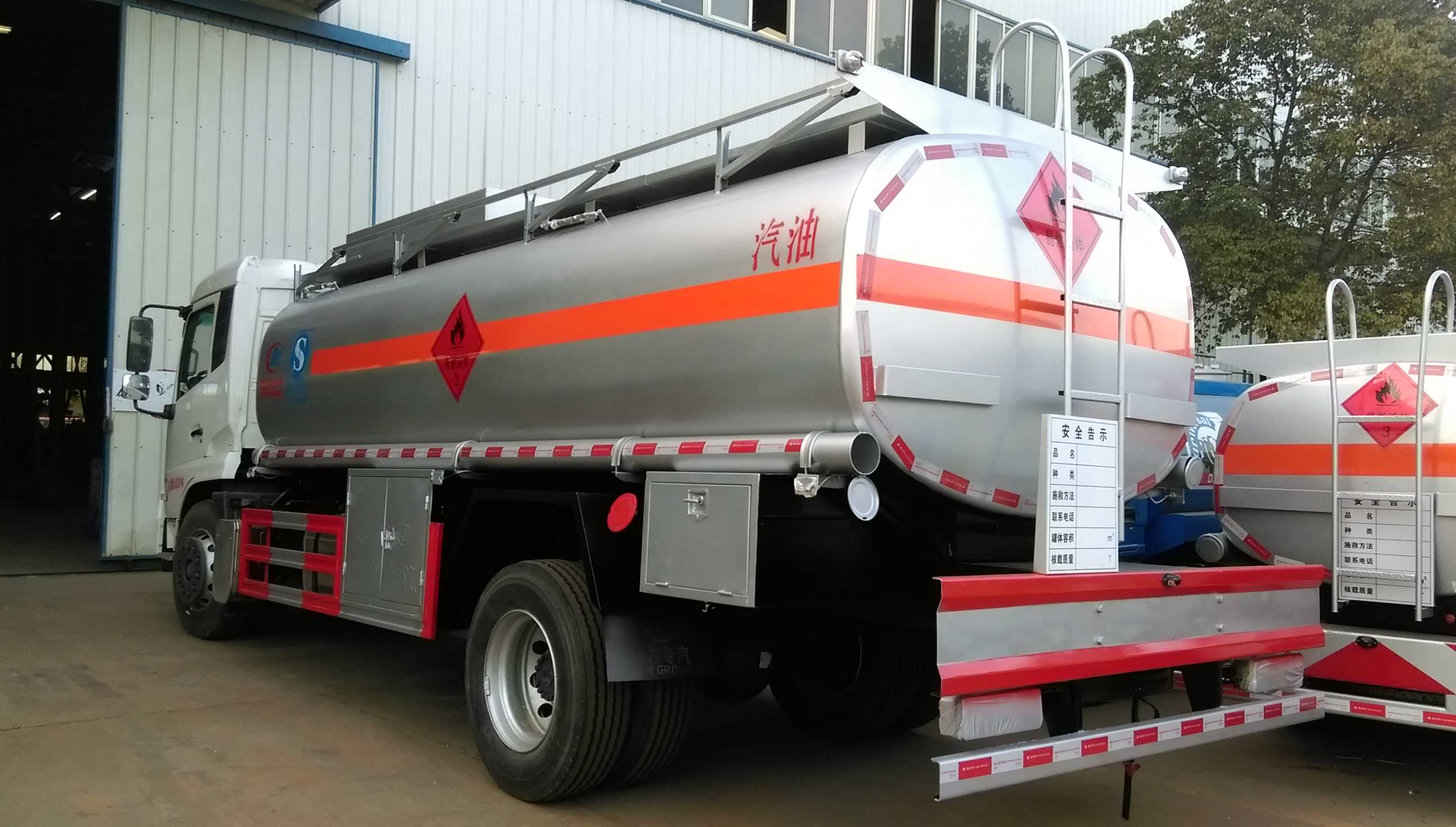
Overseas procurement managers struggle with one critical question: why does the factory price asphalt tanker truck quote from China range from $38,000 to $75,000 USD—and which price truly reflects your actual FOB and CIF costs? The answer lies in transparency. Without it, you overpay, miss deadlines, or face unexpected clearance rejections at the port. This guide breaks down every cost layer, explains regional differences, and gives you the negotiation power you need.
1. Understanding the FOB vs CIF Price Confusion in Bitumen Tanker Truck Markets
1.1 Why Factory Price Asphalt Tanker Trucks Show Such Wide Price Gaps
When you search for wholesale price bitumen tanker truck quotes online, you see numbers jumping everywhere. One supplier quotes $62,000. Another says $75,000. Both claim they're selling a Howo 371 with a 25-cubic-meter tank. The confusion comes from one simple fact: suppliers rarely break down their costs. They don't show you what portion goes to the chassis, what goes to tank manufacturing, what covers certification, what's profit margin. Without that transparency, you can't compare apples to apples.
Here's what typically happens. You request three quotes. All list the same specs: Howo 371, 6×4 drivetrain, 25m³ capacity, 49-ton rated load. But the prices range from $62,000 to $75,000 FOB. Why? One supplier includes a direct-fire heating system (adds $10,000–$12,000). Another doesn't. One includes Euro IV emission certification ($4,000–$6,000 extra). The next only certifies to National III. One applies 8mm protective coating ($2,000–$3,000). Another skips it. These aren't hidden upgrades—they're configuration choices. But without clear labeling, you think you're buying the same truck at wildly different prices.
1.2 The Three Hidden Cost Layers That Overseas Buyers Miss
Three cost layers sit inside every bitumen tanker truck quote. First: equipment costs (chassis, tank body, heating system—the tangible stuff). Second: certification and testing costs (SABER, PVoC, SON, emission testing—the regulatory stuff). Third: logistics and risk costs (shipping, insurance, clearance fees—the movement stuff). Most suppliers bundle these into one FOB price. You have no visibility. So you overpay without knowing it, or you underbid and lose money later. This is why transparent cost breakdowns matter so much.
Let me break it down. Equipment costs are usually 70–75% of your FOB price. That includes the $28,000–$32,000 Howo 371 chassis, the $12,000–$18,000 tank body, plus any heating system, insulation, or protective coatings. Certification costs run 5–8% of FOB. That's emission testing ($500–$1,500), tank pressure testing ($800–$1,200), and country-specific CoC applications ($1,200–$2,500). Logistics costs cover factory inspection ($1,500–$2,000), container packing ($2,000–$2,500), and contingency buffer. Factory profit margin typically sits at 8–12% for single units, dropping to 5–8% for bulk orders. When you see a quote without this breakdown, the supplier is either hiding something or hasn't thought through their cost structure. Either way, it's a red flag.
2. Specifications, Materials & Customization: What Changes Your Bitumen Tanker Truck Cost
2.1 Chassis Foundation: Howo 371 6×4 vs Market Alternatives
Your Howo 371 uses the ZZ1327N721EW31 chassis. 371 kilowatt engine. 6×4 drivetrain. 49-ton rated load capacity. In the wholesale market, competitors offer similar configurations ranging from 351 to 430 horsepower. Here's the pricing math: every additional 30 horsepower adds $3,000 to $5,000 to your FOB price. So if you see a similar-looking truck quoted at the same price but with 400 horsepower instead of 371, something's being cut elsewhere—maybe paint quality, insulation thickness, or factory profit. Knowing this prevents bad deals.
Why does horsepower matter for a bitumen tanker truck? Because torque determines how the truck handles loaded weight on different terrain. The Howo 371 offers 211 newton-meters of torque. That's solid for moving 49 tons on highways. But if you're running tight logistics and need faster delivery speeds (the truck maxes at 85 km/h), the horsepower margin matters. A 430-horsepower alternative might reach 92 km/h. That's $3,000–$5,000 for maybe 4–6 extra km/h. Most procurement managers don't need it. But in competitive logistics markets (Southeast Asia, for example), that speed difference justifies the cost.
2.2 Tank Body Material & Capacity: Carbon Steel vs Stainless Steel Impact
A 25-cubic-meter carbon steel tank is the industry standard for wholesale price bitumen tanker truck configurations. That's your baseline. Need 30 cubic meters? Add $1,500 to $2,000 to FOB. Want stainless steel (304-grade) for corrosion resistance in harsh coastal environments? That jumps the price by $15,000 to $20,000. Why the huge difference? Stainless steel resists salt spray and acidic environments for 15+ years without maintenance. Carbon steel needs protective coatings and inspections. Middle East markets sometimes specify stainless. African coastal ports push for it. But Southeast Asian buyers often skip it to save costs. This is why market matters: what's premium in one region is optional in another.
Here's the practical reality. A carbon steel 25m³ tank with standard epoxy coating lasts 5–7 years in salt-spray environments before corrosion becomes visible. Stainless 304 lasts 15+ years. If you're running a long-term fleet in Mombasa or Dubai, stainless justifies itself within 5–6 years when you factor in repainting and downtime costs. But if you're in inland Thailand and operating for 3–5 years before resale? Carbon steel is smart money. The $15,000–$20,000 savings goes straight to profitability. Procurement managers in different regions make different choices for good reasons.
2.3 Heating System: Direct-Fire vs Thermal Oil vs No Heat (The Wildcard)
This is where bitumen tanker truck pricing gets really regional. Middle East buyers almost always demand a direct-fire heating system—typically a BALTUR burner imported from Italy. That adds $10,000 to $12,000 to your FOB price. Why? Because bitumen needs to stay at 160 to 180 degrees Celsius during transport. Direct fire maintains that heat efficiently. The BALTUR system burns fuel oil, reaches temperature in 45 minutes, and maintains consistency across 12-hour hauls. Alternative: thermal oil heating systems. Slightly cheaper ($8,000 to $10,000). But here's the shocker—Southeast Asian buyers often want zero heating system. Their climate is already hot enough. They save $10,000 right there. So the same Howo 371 with a 25-cubic-meter tank costs $70,000–$75,000 FOB for Saudi Arabia, but only $58,000–$65,000 FOB for Thailand. Same truck. Different configurations. Different markets.
Why does this matter operationally? In Saudi Arabia, a truck without heating can't maintain viscosity during cool desert nights. The bitumen thickens. Pumping becomes difficult. Delivery delays follow. In Thailand, 28–32 degrees Celsius ambient temperature keeps bitumen fluid naturally. Operators spray bitumen onto roads using simple gravity or low-pressure sprays. No heating infrastructure needed. These aren't optional upgrades. They're market requirements.
2.4 Insulation Thickness & Emission Standards: Durability Costs That Add Up
Standard rock wool insulation is 80 to 100 millimeters. Add another 20 millimeters for extreme heat environments? That's $2,000 to $3,000 more. Middle East specs often demand 100mm because desert temperatures exceed 50 degrees Celsius. African buyers frequently accept 80mm to keep costs down. Emission standards are similarly variable. China's National III is the baseline for export tanker trucks to Africa. But upgrade to Euro III? Add $4,000 to $6,000. Euro IV? Add even more. Middle East markets prefer Euro III minimum. Why? Better engine efficiency and lower emissions mean longer vehicle life and lower fuel costs. These upgrades cost money upfront, but they justify their value in target markets.
The emission standard impacts more than just engine performance. It determines which ports accept your truck and which customs offices approve your import permit. Many Middle East countries now enforce Euro III minimums. Kenya and Nigeria don't yet, but their regulations are tightening. Specifying Euro III today protects your resale value tomorrow. The $4,000–$6,000 investment becomes insurance against future market restrictions.
3. Regional Customization Strategies: Middle East vs Africa vs Southeast Asia Wholesale Price Bitumen Tanker Truck Configurations
3.1 Middle East Market (Saudi Arabia, UAE, Kuwait): Premium Configuration Blueprint
Middle East buyers are paying for reliability in extreme conditions. Your factory price asphalt tanker truck here needs: full direct-fire heating system (BALTUR, $10,000–$12,000). 100-millimeter rock wool insulation ($5,000–$7,000). Euro III emission minimum, preferably Euro IV ($4,000–$6,000). Upgraded 12.00R20 tires for desert sand roads instead of standard 1200R ($1,500–$2,500 extra). Why these choices? Heat stress is constant. Sandstorm corrosion is real. Equipment failure in the desert costs money fast. Your FOB price target here: $70,000 to $75,000 USD.
Timeline planning is critical. SABER certification takes 14 to 21 days. That's not quick. Your supply chain must account for this delay. Here's how it works: you submit factory inspection photos, product quality certificates, emission test reports, and commercial documentation to a SABER-accredited body. They conduct a factory audit or port-of-entry inspection. If everything passes, you get the SABER CoC. If something fails, you fix it and resubmit—another 7–10 days. The payoff? SABER-certified trucks command premium resale value in that region. Buyers trust the documentation. Financing becomes easier. Resale timelines compress. That's worth the 3-week wait.
3.2 African Market (Kenya, Nigeria, South Africa): Cost-Conscious but Compliance-Heavy
African procurement is different. Price-sensitive, but regulations are strict. Skip the fancy heating system—most African buyers don't need it. Carbon steel tank (not stainless). 80-millimeter insulation (cost optimization). National III emission standard (sufficient for most countries). Standard 1200R tires. Your FOB price drops to $62,000 to $68,000 USD. Sounds cheaper, right? But here's the reality: clearance timelines are unpredictable. Kenya's Mombasa port can back up for 5–10 days. Nigeria's customs process is notoriously slow. You need a professional customs broker on the ground—not optional. Plan for 50 to 70 days total timeline, not 30 to 40.
PVoC certification in Kenya takes 21 to 30 days. SON in Nigeria takes 28 to 40 days. These aren't flexible. Your budget must include them ($1,200–$2,500 per CoC application). Your timeline must respect them. Here's what happened to one contractor last year: he imported a bitumen truck to Mombasa without coordinating with KEBS in advance. The truck arrived. Port inspector noted "incomplete PVoC documentation." Truck sat at port for 12 days waiting for correction. Demurrage fees: $1,200. Correction time: another 5 days. Total delay: 17 days. He lost the contract because he missed the delivery window by 9 days. Budget-conscious procurement saved $4,000 on upfront certification. Lost $15,000 on contract penalties. The lesson: don't cheap out on compliance timeline.
3.3 Southeast Asia (Thailand, Indonesia, Vietnam): Fast-Turnover Budget Configuration
Southeast Asia is your speed market. Strip down the configuration. Skip heating entirely—unnecessary in that climate (ambient 28–32°C keeps bitumen fluid). National III emission standard is fine (regulations are flexible). Carbon steel tank. 80-millimeter insulation. Your factory price asphalt tanker truck FOB lands at $58,000 to $65,000 USD. Major difference from Middle East? Clearance is fast. 7 to 10 days typical. No mandatory CoC requirement in most cases. Total lead time: realistic 20 to 30 days from order to delivery. That's a game-changer for fast-moving markets.
If you're building a fleet quickly (like a Thai contractor who won a 6-month road maintenance contract), Southeast Asia sourcing gives you speed. You can source 5 trucks, have them delivered and operational within 30 days. Middle East configuration? You're looking at 50–60 days before the first truck rolls. That's a critical difference when contracts have tight timelines. The downside? These trucks aren't built for extreme conditions. They're functional, not premium. Three-year useful life in tough conditions. Then you upgrade. That's the tradeoff.
3.4 Bulk Purchase Discounts: How Volume Changes Wholesale Price Bitumen Tanker Truck Negotiation
Volume matters. Buy 1 to 3 trucks? No discount applied. Buy 4 to 10 trucks? You get 5% off. That's $3,000 to $4,000 per unit savings. Buy 11 to 50 trucks? Now you're at 8 to 10% off—that's $5,000 to $6,500 per unit. Buy 50 or more? Negotiate 12 to 15% off. Sometimes more. At that volume, you're structuring a custom deal. Factory standardizes production. Certification can be batched (saves 3–5 days per truck). Your risk drops. So your discount grows.
Here's the negotiation playbook. When you approach 10 trucks, mention your intent to scale to 25–50 over 18 months. Factory suddenly becomes flexible on the first batch pricing. They might offer 5% on 10 units plus a locked-in price for future orders. That's leverage. When you approach 50 trucks, you're talking custom configurations. Want 80mm insulation instead of 100mm? Done. Want National III instead of Euro III? Done. Want direct FOB pickup instead of CIF delivery? Negotiable. Volume unlocks flexibility that single-unit buyers never see.
4. FOB/CIF Cost Structure Transparency & Procurement Best Practices
4.1 FOB Price Anatomy: Inside the $70,000–$75,000 Wholesale Price Bitumen Tanker Truck Quote
Let's open the black box. A typical $70,000–$75,000 FOB quote for a Middle East-spec wholesale price bitumen tanker truck includes these components:
Cost Component | Amount | % of FOB |
|---|---|---|
Howo 371 Chassis | $28,000–$32,000 | 40% |
25m³ Tank Body Manufacturing | $15,000–$18,000 | 22% |
Direct-Fire Heating System | $10,000–$12,000 | 15% |
Insulation & Protective Coating | $5,000–$7,000 | 7% |
Emission Testing & Certification | $2,000–$3,000 | 3% |
Quality Inspection | $1,500–$2,000 | 2% |
Packing & Container Loading | $2,000–$2,500 | 3% |
Factory Profit Margin | $6,000–$9,000 | 8–12% |
Now you see where the money goes. When you negotiate, you know which parts are locked (chassis, tank manufacturing) and which have flexibility (certification bundling, profit margin compression). The chassis is sourced from Sinotruk's official network—price is fixed industry-wide. Tank body manufacturing depends on material costs and labor—maybe 5% negotiable downward. Heating system is imported component—price is set by BALTUR/supplier. But factory profit margin? That's negotiable. So is certification cost. If you bundle 10 trucks, the factory can negotiate group emission testing ($1,500 total instead of $500 per truck). Knowledge is leverage.
4.2 CIF Cost Calculation by Route: Shanghai to Key Markets
CIF equals FOB plus ocean freight, clearing fees, and insurance. Here's how it breaks down by route:
Shanghai to Jeddah, Saudi Arabia:
Ocean freight (40FT): $1,800–$2,200
SABER clearing fees: $1,500–$2,000
Insurance (2%): $1,400–$1,500
Total CIF addition: $4,700–$5,700
Timeline: 36–53 days
Shanghai to Mombasa, Kenya:
Ocean freight (40FT): $2,500–$3,000
PVoC clearing fees: $1,200–$1,800
Insurance (2%): $1,400–$1,600
Total CIF addition: $5,100–$6,400
Timeline: 50–73 days (port congestion common)
Shanghai to Bangkok, Thailand:
Ocean freight (40FT): $1,200–$1,500
Clearing fees: $600–$1,000
Insurance (2%): $1,200–$1,400
Total CIF addition: $3,000–$3,900
Timeline: 12–20 days (fast clearance)
Notice the pattern? Longer distances cost more. More complex regulations (SABER, PVoC) add clearing fees. Slower ports stretch timelines. Mombasa's PVoC inspection happens at the port after vessel arrives. That's automatic 3–7 day delay for inspection scheduling. Lagos port in Nigeria is even slower (5–10 day backlog typical). Bangkok's customs is efficient (usually 1–2 days). These aren't minor variations. They're deal-breaking variables.
4.3 FOB vs CIF: Which Payment Term Should Your Procurement Team Choose?
First-time importers? Choose CIF. Yes, you pay 3 to 5% premium ($1,500–$2,500 per truck). But you know your total cost. Delivery risk transfers to the supplier. You buy certainty. The supplier handles port delays, customs clearance, insurance claims. If the truck gets stuck, it's their problem, not yours. That peace of mind is worth the premium for newcomers.
Experienced importers with local customs brokers? Choose FOB. You shop freight rates competitively. You hire your own broker. You save 2 to 3% compared to CIF. But you need operational sophistication. Clear communication with your broker is essential. You also assume delay risk. If Nigeria's customs takes 45 days instead of 30, that's your cost, not the supplier's. Large-scale buyers (50+ trucks)? Negotiate hybrid terms. FOB pricing with supplier coordination on clearance. Worth $200–$500 per truck in management time. The supplier provides clearance documentation, connects you with local agents, guarantees document completeness. You maintain cost control and speed benefit.
4.4 Critical Compliance Documents: The Checklist That Prevents Port Delays
Missing documents cause delays. Certification rejections happen. Here's what you absolutely need:
Commercial Documents:
Commercial invoice (truck model, chassis VIN, tank capacity, engine type, emission standard, country of origin)
Packing list (tank serial number, chassis number, tire spec, heating system model, gross/net weight)
Certificate of Origin (proves 100% China manufacture—get this from your local chamber of commerce or China Council for Promotion of International Trade)
Certification Documents:
Product quality certificate from factory (signed by QA manager, with factory stamp)
Third-party test report (emission testing per Chinese National Standard III, tank pressure testing per GB standards, safety features per ISO 9001)
CoC certificate matching your target market:
Middle East: SABER notarized conformity certificate (14–21 days to obtain)
Africa: PVoC in Kenya (21–30 days), SON in Nigeria (28–40 days)
English-language specifications sheet and maintenance manuals
12-month warranty documentation (or 20,000-kilometer warranty, whichever comes first)
Missing the emission test report? Customs rejection in Middle East ports. No CoC? Direct refusal or $1,000+ fines in Africa. No maintenance manual? Customer dissatisfaction = future order cancellation. These aren't optional. They're fundamental to deal closure. One final tip: have the factory provide all documents in electronic format 10 days before shipment. That gives you time to correct errors before the vessel departs.
CONCLUSION
Transparent FOB/CIF pricing, market-specific configurations, and proper documentation are the three pillars that transform wholesale price bitumen tanker truck procurement from guesswork into a predictable, profitable process. The Howo 371 with a 25-cubic-meter tank is reliable. The factory price asphalt tanker truck is competitive. But your success depends on clear communication, proper documentation, and realistic timeline planning.
Next step? If you're sourcing bitumen tanker trucks for the Middle East, Africa, or Southeast Asia, contact us for a detailed cost breakdown and market-specific configuration recommendations. We'll show you exactly where your money goes and how to negotiate effectively with suppliers.
Site Adaptation Suggestion
For Middle East-Focused B2B Procurement Hub
Recommended URL: /middle-east/howo-371-saber-certified-bitumen-truck-pricing/
Customization Strategy:
Expand Section 3.1 (Middle East configuration) by 40% with detailed SABER pre-clearance timeline and real case studies on certification delays
Add dedicated subsection: "SABER CoC Application: Step-by-Step Process from Factory Submission to Certificate Issuance"
Include sidebar case study: "Why One Riyadh Contractor Paid $8,000 Extra Due to Heating System Misconfiguration"
Emphasize corrosion resistance specifications for desert sand environments
Modified CTA: "Get Free SABER Compliance Checklist + Pre-Clearance Timeline"
Target Audience: Saudi/UAE/Kuwait government procurement departments, oil company supply chains, premium construction contractors.