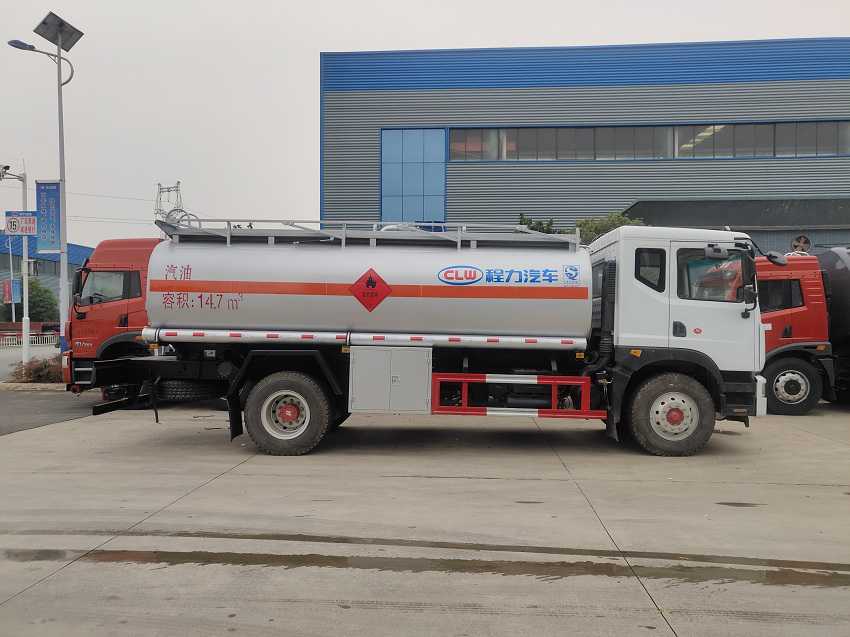
When buying a tanker truck for sale wholesale in China, the gap between FOB and CIF pricing can surprise you by 30–50 percent—here's exactly where your money goes and how to avoid clearing delays at every port.
1. THE PROBLEM: Why FOB Price Isn't Your Real Cost
Understanding the Hidden Expenses Behind Factory Pricing
1.1 The FOB Price Trap: Factory Quote vs. Final Port Cost
Most buyers see the factory quote first—$45,000 for a Liuqi 24.7-cubic-meter oil tanker truck with Yuchai 270hp engine. That's FOB (Free On Board) price, meaning the seller's responsibility ends when the truck leaves the Chinese port. From that moment, everything else is your problem: ocean freight, insurance, customs clearance, certifications, and port delays. This pricing gap alone costs 30 to 50 percent extra.
The real shock comes when your truck sits at the destination port for 7 to 14 days because your PSI (Pre-Shipment Inspection) certificate is missing or your COC certification isn't complete. Port storage runs $100 to $200 daily. Budget $1,400 to $2,800 in pure waiting costs—money that shouldn't exist if the paperwork was right from day one.
Why does this happen? Many buyers think the Chinese factory inspection (罐体检验报告) is enough. It's not. Chinese inspections are internal quality proof. International buyers need third-party PSI certificates signed by CCIC or TÜV. That's a separate process, separate timeline, separate cost.
1.2 Regional Cost Multipliers: Why Your Budget Doesn't Travel
Saudi Arabia, Thailand, and Kenya have wildly different import rules. Ship a 24.7-cubic-meter oil tanker to Saudi Arabia? You need SASO COC certification ($1,500–$3,000, 4–8 weeks minimum). Ship the same truck to Thailand? You're hit with 200 percent import tax on top of all other costs. Ship to Kenya? Customs clearance takes 14–21 days and costs $2,000–$3,500 just to clear the port.
This is why one "universal" pricing model fails everywhere. A buyer who doesn't understand regional differences ends up quoting one price to their city council and discovering the real cost too late. The tanker truck for sale factory in China shows you one number, but your final landed cost depends entirely on destination rules.
Here's the truth: import tax multiplies everything. A $5,000 saving on FOB price becomes $15,000 saved in Thailand if you choose a 4-cubic-meter truck over a 20-cubic-meter model. That's why we offer multiple sizes—small Dongfeng water trucks for tax-heavy regions, large Liuqi oil tankers for straightforward markets.
1.3 Document Gaps: Why Incomplete Paperwork Costs Weeks
Your tanker truck factory inspection report looks complete: whole vehicle certificate, tank inspection, product quality certificate. But the destination country doesn't recognize a Chinese inspection. Saudi Arabia wants SASO CoC. Africa wants local certification. Europe wants CE Mark. Each requires a separate application, separate fees, separate timelines.
The most common mistake? Shipping without an International PSI Certificate. Chinese inspections are internal quality control. International PSI is third-party verification by CCIC or TÜV—$800–$1,500 and 7–10 days separate from what you already paid. Miss this, and your truck waits.
Missing documents also trigger inspection delays. One buyer exported without a Certificate of Origin and faced 10 days of additional hold time at the Saudi port. Cost? $1,000 in storage plus schedule slippage. All preventable with one extra form.
2. THE PROCESS: FOB vs CIF Explained by Market
Step-by-Step Cost Breakdown for Three Key Regions
2.1 Middle East Route (Saudi Arabia & UAE): SASO-Certified Oil Tanker Model
You're buying the Liuqi 24.7-cubic-meter aluminum alloy oil tanker truck with Yuchai 270hp engine, 25.5 tons gross weight, front disc brake and rear drum brake, full Euro-standard tank configuration (emergency shut-off valves, anti-overflow probes, grounding sockets). The Middle East market prefers large-capacity models because gas stations are far apart. You'll want anti-corrosion inner lining for the heat, upgraded cooling systems, and optional 304 stainless steel fittings for salt-air environments.
Your cost breakdown for SASO-certified tanker truck:
Component | Cost USD | Timeline |
|---|---|---|
FOB Factory Price | $45,000 | Factory to Shenzhen port |
SASO COC Certification | $2,000 | 4–8 weeks (processing by SABER body) |
International PSI Report | $1,000 | 7–10 days (CCIC verification) |
Ocean Freight (China → Dammam) | $6,000–$8,000 | 20–25 days shipping |
Marine Insurance (1% FOB) | $500–$800 | Included in CIF |
Total CIF | $54,500–$57,300 | 40–50 days total |
Note: Add another 10–15% buffer for Saudi port fees, customs broker charges, and local inspection ($2,000–$3,500). The timeline is critical. SASO certification must start 6–8 weeks before your desired delivery. If you wait, you'll miss your window.
Critical detail for Middle East: SASO requires the tank to have emergency shut-off valves (we provide), anti-overflow probe rods (we provide), and grounding sockets for static electricity safety (we provide). But SASO also checks your Product Quality Certificate format and your tank pressure-test data. If either is formatted wrong, they send the application back. That adds 2–3 weeks. We've learned to submit all documentation through SABER (Saudi Product Safety Program) online system to avoid this. You should request our pre-formatted PSI template when ordering.
Biggest risk: Missing SASO certification paperwork leads to 3–4 week delays and $2,100+ in port storage. One customer forgot their Certificate of Origin. Saudi port held the truck for 15 days. Final cost for that one document? $3,000 in storage fees plus lost contract value.
2.2 Southeast Asia Route (Thailand, Indonesia, Malaysia): Small Water Truck Model
Here, a 4–6 cubic-meter Dongfeng water sprinkler truck makes more sense than a 24-cubic-meter oil tanker. Why? Import tax. Thailand charges up to 200 percent duty on commercial vehicles. Your $45,000 tanker becomes $135,000 landed cost. But a $10,000 small water truck becomes $30,000—still high, but at least competitive.
Each country has different standards: Thailand wants local agent inspection, Indonesia requires EPA registration, Malaysia has its own standards board. This fragmentation is your biggest complexity. Many sellers hide this. We're explicit about it upfront.
Your cost breakdown for 4-cubic-meter water truck to Bangkok:
Component | Cost USD |
|---|---|
FOB Factory Price | $10,000 |
PSI Report | $500 |
Ocean Freight (China → Bangkok) | $3,000–$4,000 |
Marine Insurance (1.2% FOB) | $200–$300 |
Subtotal (pre-tax) | $13,700–$14,800 |
Thailand Import Tax (200%) | $27,400–$29,600 |
Final Landed Cost | $41,100–$44,400 |
Notice how FOB savings multiply through import tax? A $5,000 cheaper truck at factory saves $15,000 at final cost. That's why water truck sizing is critical for Southeast Asia. Smaller is smarter.
Local second-stage certification per country adds $500–$1,500 each. Thailand's local agent inspection takes 5–7 days. Indonesia's EPA registration takes 10–14 days. Budget accordingly.
Timeline: 30–40 days including local verification delays. If you rush, you'll miss the local certification window and lose 2–3 weeks waiting for the next available slot.
2.3 Africa Route (Kenya, Egypt, Nigeria): Garbage Truck with TCO Focus
African government buyers and waste management companies think total cost of ownership (TCO), not just FOB price. They care about reliability and spare parts availability for 10 years of operation. A 10–15 cubic-meter compactor garbage truck works better here than luxury features. Our factory's promise of lifetime spare parts supply at cost matters more than air conditioning because replacement parts from European competitors take 6–8 weeks to arrive. We ship from our warehouse within 3–5 days.
But Africa has no single inspection standard. Egypt wants GOEIC certification, Kenya wants KEBS approval, Nigeria wants SON registration. Different agencies, different timelines. This is why we have local partner networks in each country—to streamline the second-stage certification.
Your cost breakdown for 10-cubic-meter garbage truck to Mombasa:
Component | Cost USD | Notes |
|---|---|---|
FOB Factory Price | $30,000 | Compactor body included |
International PSI Report | $1,000 | CCIC 7–10 days |
Ocean Freight (China → Mombasa) | $5,000–$6,000 | 20–25 days |
Marine Insurance | $400–$600 | 1.2% FOB |
CIF Total | $36,400–$37,600 | Arrives at port |
Local Certification (KEBS) | $500–$1,500 | 7–14 days in-country |
Customs Clearing (Kenya) | $2,000–$3,500 | Port processing |
Total Landed Cost | $39,400–$42,600 | Ready for delivery |
Clearance takes 14–21 days. Plan 50–65 days total from order to final port. Key advantage: our lifetime parts supply at cost undercuts European competitors' 5-year warranty limitations. For African buyers running tight municipal budgets, this is huge.
3. COMPARISON: FOB vs CIF—Which Term Protects You?
Risk Allocation and When to Choose Each
3.1 FOB: Lower Price, Higher Risk, for Experienced Importers
FOB means the seller's responsibility ends when the truck leaves the Chinese port. You own it and all the risk from that moment. You save $2,000–$3,000 on buyer's premium, but you manage:
Arranging ocean freight yourself (or hiring your own freight forwarder)
Obtaining marine insurance independently
Handling all clearing documentation at destination port
Managing PSI/COC certification timing
Absorbing any shipping delays or port issues
Use FOB if you have import experience, understand your destination country's requirements, have a local customs broker on speed dial, or your budget is extremely tight. For tanker truck for sale from China, FOB works if you've done this before.
Payment structure under FOB:
30% deposit (production commitment)
50% before shipment (factory confirms readiness)
20% on document receipt (you control timing)
This lets you finance the purchase in phases. It's cheaper upfront but demands active management on your end.
3.2 CIF: Higher Price, Seller Bears Risk, for First-Time Buyers
CIF means the seller (our factory) handles everything: freight, insurance, clearing risk—all the way to your destination port. You pay more upfront ($2,000–$3,000 premium), but the truck legally belongs to us until it reaches your port. You're not responsible for shipping delays, and your risk is contained.
Use CIF if you're new to equipment imports, your budget allows flexibility, you want certainty on final delivery date, or you need legal protection against shipping damage. Most government procurements prefer CIF for clarity and accountability.
Payment structure under CIF:
30% deposit
70% upon PSI passing (before any ocean movement)
Final balance after destination-port delivery confirmed
The CIF contract should explicitly state:
Warranty scope: Tank/superstructure = 1-year free warranty (manufacturing defects only). On-site service (24-hour response within China, 48 hours outside) applies to domestic sales. International customers must arrange extended warranty ($3,000–$8,000) or sign local repair-partner agreement.
Spare parts: Lifetime supply at cost (doesn't include freight or import duties to your country).
Liability: Seller covers shipping damage up to port-of-destination. You cover everything after port.
Write all of this into your contract before signing. Many disputes come from vague warranty language.
3.3 Complete Documentation Checklist for Both Terms
Whether FOB or CIF, you need these documents before shipping:
Seller Provides:
✓ Whole vehicle certificate
✓ Tank/superstructure inspection report
✓ Product quality one-time certificate
✓ Export declaration
✓ Certificate of Origin
Third-Party Provides (8–10 days lead time):
✓ International PSI Certificate (CCIC or TÜV)
✓ SASO/COC/Local certification per destination
You Arrange (CIF seller can handle):
✓ Commercial invoice, packing list, bill of lading
✓ Marine insurance proof
✓ Customs clearance coordination
✓ Local port handling
Missing any single document? Your truck waits. Budget 7–10 additional days if paperwork arrives incomplete. One buyer forgot their tank pressure-test report and got held up 10 days at customs. Simple prevention: use our pre-export checklist and have a third-party agent review everything 2 weeks before loading.
4. RECOMMENDATIONS: Procurement Strategy & Contract Terms
How to Negotiate, Pay, and Protect Your Investment
4.1 Negotiating Complete CIF Quotations with Clear Breakdowns
Never accept a single-line price quote. Demand an itemized CIF breakdown:
FOB Vehicle Price (our Liuqi 24.7-cubic-meter oil tanker = $45,000; Dongfeng 6-cubic-meter water truck = $12,000)
International Certifications (SASO/COC/CE per destination: $1,500–$3,000)
Third-Party PSI (CCIC/TÜV: $800–$1,500)
Ocean Freight ($3,000–$8,000 destination-dependent)
Insurance (0.8–1.5% FOB value)
Local Clearing Fees ($2,000–$3,500 buffer, varies by port)
Extended Warranty/Support (optional: $3,000–$8,000)
This transparency shows exactly where your money goes. Compare two quotes by line item, not final total—you'll spot hidden fees or missed certifications immediately. One buyer used this method and caught that a competing supplier forgot SASO certification cost. Saved him $2,000 and a month of clearing delays.
4.2 Payment Terms: FOB vs CIF Structures
FOB Payment Structure (you assume clearing risk):
30% deposit (production commitment)
50% before shipment (factory confirms readiness + all documentation prepared)
20% on document receipt (you control final payment timing)
CIF Payment Structure (seller assumes clearing risk):
30% deposit
70% upon PSI passing (before any ocean movement starts)
Final balance after destination-port delivery confirmed
Our Warranty Scope (critical detail often missed):
Tank/superstructure: 1-year free warranty (defects in manufacturing/assembly only, not transport damage)
On-site service: 24-hour response within China, 48 hours outside China—but this is for domestic sales territory only
International customers: Must arrange extended warranty ($3,000–$8,000) OR sign local repair-partner agreement
Parts supply: Lifetime supply at cost (does NOT include freight or import duties to your country)
Write all of this into your contract before signing. Generic terms lead to disputes later.
4.3 Timeline Management: 30–60 Day Path to Port Delivery
Plan your procurement calendar:
Days 1–10: Factory-side inspection + final specifications confirmation (we handle tank internal pressure test, structural integrity check, Yuchai engine verification)
Days 10–20: Third-party certification application (PSI report + SASO/COC if required by destination). This starts after factory inspection clears.
Days 15–25: Ocean freight booking and insurance arrangement (can overlap with certification)
Days 20–40: Ocean transport (China to destination varies: 15–25 days depending on port; Shenzhen to Bangkok = 10 days; Shenzhen to Dammam = 20 days; Shenzhen to Mombasa = 25 days)
Days 35–55: Destination port arrival + clearance window (7–14 days typical; longer if documents incomplete)
Day 50–60: Delivery to your location or local agent
If you order today, earliest realistic delivery = 45–60 days. Most delays happen at weeks 2–3 (missing certifications) or weeks 4–5 (port clearance backlog). Communicate timeline expectations clearly in the contract.
One critical detail: Chinese New Year (typically January–February) and summer typhoon season (July–September) can add 5–10 days to ocean freight timelines. Plan around those windows if possible.
4.4 Red Flags in Supplier Contracts & How to Negotiate Around Them
Red Flag #1: "Warranty covers manufacturing only—not transport damage." Negotiate: Add marine insurance rider naming both parties, or require CIF coverage includes 30-day post-delivery damage claims.
Red Flag #2: "Spare parts available at cost—cost determined by supplier." Negotiate: Define "cost" as factory cost + 10% handling fee, with 6-month price lock to prevent surprise increases.
Red Flag #3: "Technical support available during China business hours (Beijing time)." Negotiate: Require 24-hour email response for critical issues, with escalation to English-speaking engineer within 12 hours.
Red Flag #4: "Our 48-hour on-site service applies nationwide." Negotiate: Clearly state this applies to China only; internationally, seller provides remote guidance and arranges local partner support at cost.
Your contract should also specify: What happens if FOB tanker truck for sale delivery is late? (Usually: 0.5% price reduction per week, capped at 5%. Beyond that, buyer can cancel with no penalty.) What if destination port turns down paperwork? (Seller corrects at no additional charge if it's seller's error; buyer pays if it's destination country's surprise requirement.)
5. QUICK REFERENCE TABLE: Regional Comparison
Factor | Middle East (Saudi Arabia) | Southeast Asia (Thailand) | Africa (Kenya) |
|---|---|---|---|
Best Product | Liuqi 24.7m³ oil tanker | 4–6m³ water truck | 10–15m³ garbage truck |
FOB Price | $45,000 | $10,000 | $30,000 |
Import Tax | 0–5% (negotiable) | 200% | 20–30% |
Key Certification | SASO CoC (4–8 weeks) | Local agent inspection | KEBS/GOEIC |
Ocean Freight | $6,000–$8,000 | $3,000–$4,000 | $5,000–$6,000 |
Customs Clearance | 7–10 days | 5–7 days | 14–21 days |
Total CIF | $54,500–$57,300 | $13,700–$14,800 | $36,400–$37,600 |
Final Landed (with tax) | $54,500–$57,300 | $41,100–$44,400 | $39,400–$42,600 |
Timeline (order to delivery) | 40–50 days | 30–40 days | 50–65 days |
Maintenance Advantage | Air conditioning, corrosion-resistant lining | Compact, fuel-efficient | Lifetime parts supply |
CONCLUSION: Making Your Decision
FOB gives you control and lower price if you have import experience and tight budget. CIF costs more upfront but eliminates shipping-phase risk and clears the path faster. Either way, demand itemized quotes, verify certifications match your destination, and plan for 45–60 day timelines.
The tanker truck for sale wholesale price from China is only step one—the real cost arrives when you factor in freight, taxes, clearing delays, and certifications. Use our complete breakdown above to build your budget. Avoid surprises by locking in documentation timelines upfront. Your truck should arrive on schedule, not stuck at a port waiting for missing paperwork.
Ready to get started? Contact us with your destination country and truck specifications. We'll send you a complete, itemized quote with SASO/COC timeline estimates specific to your market. No hidden fees. No surprises.