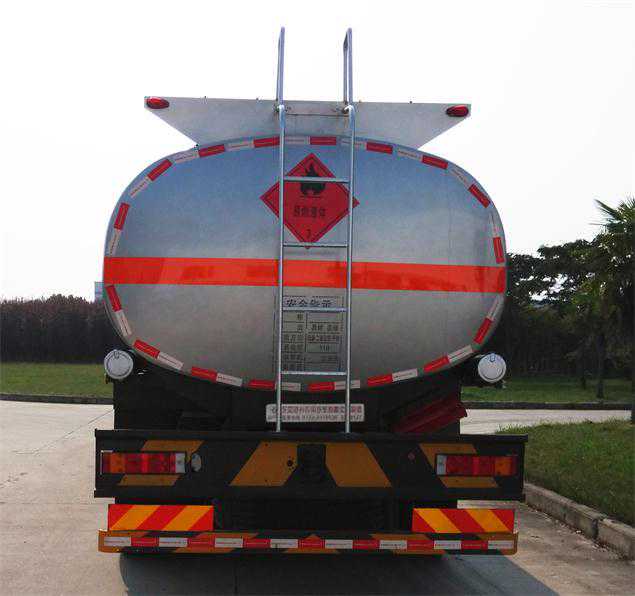
Choosing between a 29.7CBM single chassis tanker truck and a 50CBM semi-trailer isn't just a budget decision—it's about understanding your supply chain, customs requirements, and total cost of ownership across 5-10 years of operation.
1. Understanding Your Real Procurement Challenge: Single Chassis vs. Semi-Trailer Specs
Most buyers struggle to see past the headline numbers—capacity, price, weight. But the real question is: which truck actually fits your operational reality?
When you're sourcing from a China liquid tanker truck supplier, the choice between a 29.7CBM front 4 rear 8 single chassis and a 50CBM semi-trailer isn't about which one is "bigger." It's about matching the right truck to your actual operation. We work with procurement teams across Southeast Asia, Middle East, and Africa. And here's what we've learned: most don't have clear visibility into the total cost gap—both upfront and over time.
1.1 The Hidden Cost Gap Most Procurement Teams Miss
You see a 29.7CBM truck priced at $40,000 and a 50CBM at $70,000. But those numbers hide 5-10 year maintenance, fuel efficiency, and depreciation curves that swing ROI by $15,000-30,000.
Single chassis vehicles experience higher brake wear due to frequent stops. Depreciation happens faster (6-8 year operational life). But if you're running city routes with 15,000-30,000 tons annual volume, that math works.
Semi-trailers have lower per-ton operating costs. They depreciate slower (8-10 years). But they demand secure parking, professional driver training, and routes that justify 300+ kilometer hauls. Miss those conditions, and you're carrying dead weight.
1.2 Why Specifications Alone Don't Predict Real-World Performance
A 32-ton GVW chassis with 20-ton rated load seems straightforward. But throw in narrow Southeast Asian streets, Middle Eastern customs delays, or European ADR certification requirements, and that spec sheet becomes incomplete.
The aluminum alloy tank on both designs offers 20-40% weight savings versus carbon steel. That means higher payload capacity and better fuel economy. But in humid tropical climates, maintenance requirements differ. In cold European winters, thermal expansion ratios matter differently.
Your route, your cargo type, and your regulatory environment reshape what "29.7CBM" or "50CBM" actually means in practice.
1.3 Three Critical Factors That Change Everything
Before you compare specs, align on these three dimensions:
Your geographic footprint (city vs. highway). Annual tonnage targets (15,000 vs. 50,000 tons). Certification environment (ASEAN vs. SASO vs. ADR).
These three variables determine which truck brings ROI. Everything else is secondary.
2. Detailed Specification Comparison: Chassis, Tank, and Capacity Under Real Conditions
Now let's look at what you actually get with each design—not marketing speak, but real parameters that impact daily operations.
2.1 The 29.7CBM Single Chassis: Dongfeng Tianlong 350HP Specifications
This is the workhorse for congested areas. Built on the Dongfeng Tianlong 350 horsepower chassis from a China liquid tanker truck factory.
Total weight: 32 tons. Rated load: 20-21 tons. Real-world capacity when fully loaded: 24-27 tons. External dimensions: 11,900mm length × 2,530mm width × 3,500mm height. Wheelbase: 1995+4500+1350mm.
Tire setup: 12× 295/80R22.5 vacuum tires. Engine displacement: 7,500ml. Power output: 257 kilowatts (350 horsepower). Tank material: Aluminum alloy construction. Emission standard: China National VI (GB17691-2018).
Braking system: Air brakes, secondary brakes, dynamic brakes working together. Air conditioning included. Tare weight (empty vehicle): 12,000kg.
This design excels in point-to-point delivery, industrial parks, and areas with narrow access routes. Think municipal water distribution, fuel station supply runs, regular maintenance stops at multiple locations.
2.2 The 50CBM Semi-Trailer: Payload Advantage & Suspension Design
Here's the heavy hitter. Tank capacity: 50 cubic meters. Bone structure: 12.9 meter frame. Payload per trip: 30-40 tons (40% more than single chassis).
Tank options: Goose-neck design or straight tank. Coupling pin: 90mm standard. Suspension: Triple axle with your choice of 13-ton Fuhua bridge or BTW bridge. Tire specification: 1,200mm vacuum tires.
Braking system: Four-channel ABS. Tank ports: Euro-standard (two outlet/inlet sets). Cab and trailer: Separate for operational flexibility.
This design dominates long-haul routes where maximizing cargo per trip pays off. Think 300+ kilometer runs, port-to-refinery operations, high-volume corridor distribution.
2.3 Material Matter: Aluminum Alloy vs. Carbon Steel Tank Construction
Both models in our lineup use aluminum alloy construction—lighter weight means higher payload capacity and better fuel efficiency.
Standard thickness: 4.5-6mm depending on cargo type. For corrosive liquid transport (acids, certain chemicals), specify 304 stainless steel—16-24% chromium, up to 35% nickel. This provides excellent corrosion resistance and extends tank life by 3-5 years.
For food-grade or ultra-corrosive cargo, upgrade to 316L stainless steel (adds molybdenum, improves pitting resistance). Cost premium: 25-35% higher than aluminum, but zero maintenance headaches in aggressive environments.
This detail matters. Aluminum excels for fuel, water, and mild liquids. Stainless steel dominates chemicals and food products.
3. Market-Specific Selection Strategy: Southeast Asia, Middle East, Africa & Europe Routes
The same truck doesn't work everywhere. Let's map where each design dominates—and why your region matters more than capacity alone.
3.1 Southeast Asia Market: Single Chassis Dominates Due to Urban Congestion & Port Procedures
Thailand, Vietnam, Indonesia street widths average 6-8 meters. A 50CBM semi-trailer runs 13+ meters—turning becomes problematic. Parking and secured storage also become nightmares.
Port clearance in these countries moves faster (1-2 days standard) when paperwork is complete. Single chassis vehicles process faster through ASEAN customs because documentation is simpler—fewer axle configurations to verify.
Import duty calculation in ASEAN often ties to axle count. Front 4 rear 8 avoids extra tax brackets that hit larger rigs.
COC certification timeline: 14-21 days for single chassis. Testing requirements are streamlined. Inspection reports from SGS or Intertek cover fewer variables.
Customs clearance: 2-3 days standard in Thailand, Vietnam. Total time from order to operation: 60-75 days FOB Shenzhen.
3.2 Middle East & Africa Long-Haul: Semi-Trailer ROI Advantage on Highway Routes
Saudi Arabia, UAE, Egypt highways span 300+ kilometers. A 50CBM hauls 30-40 tons vs. single chassis 24-27 tons. Over 50 annual trips, that's 250-400 extra tons. Revenue gain: 15-25%.
Depreciation also favors semi-trailers. A well-maintained 50CBM rig runs 8-10 years strong. Single chassis see higher stress and typically depreciate faster.
One critical catch: SASO (Saudi Standards, Metrology and Quality Organization) certification adds 4-8 weeks lead time for any tanker truck. But once certified for the 50CBM semi-trailer, you can deploy it across GCC countries with that same COC/SABER documentation.
Volume buyers in these regions purchase 2-5 units at once. Semi-trailer ROI becomes clearer at scale. Total time: 90-120 days including SASO approval.
3.3 European Market: Start Small—ADR Certification Justifies Single Chassis First
European ADR (European Agreement on the International Carriage of Dangerous Goods by Road) certification costs €3,000-5,000 per truck. Plus full CE marking. Buyers typically import 1-2 units as proof-of-concept before scaling.
Single chassis tanker trucks carry lower risk. Lower certification costs. Faster approval cycles. Spare parts network reaches you faster for single units versus semi-trailers.
ADR certification timeline: 6-8 weeks for initial documentation. After approval, repeat vehicles move faster (3-4 weeks).
Test-and-scale strategy makes sense here. Deploy single chassis, prove market fit, then scale to semi-trailers once you have 10+ vehicle fleet running.
4. Certification Requirements & Customs Clearance Timeline: Step-by-Step China Liquid Tanker Truck Factory Coordination
Once you've chosen your truck type, the timeline and documentation become critical. Here's the exact process from order to customs clearance.
4.1 COC Documentation Checklist: What Differs Between Single Chassis & Semi-Trailer
For 29.7CBM Single Chassis (Timeline: 14-21 days):
Product quality certificate (factory-issued)
Chassis inspection report (suspension, steering, braking system verified by third party)
Aluminum tank integrity test (wall thickness certified, weld seam X-ray checked, anti-corrosion coating thickness verified per ISO 4413)
Electrical system schematic (wiring diagram, lighting system)
English-language operation & maintenance manual (minimum 50 pages)
Warranty documentation (typically 3-5 years parts coverage)
For 50CBM Semi-Trailer (Timeline: 21-35 days):
Everything above PLUS:
Fifth wheel coupling load certification (90mm pin rated for 13+ tons vertical load)
Three-axle brake load-balancing report (WABCO standard compliance)
Suspension system certification (mechanical spring or air suspension—different docs required)
WABCO relay valve documentation (if air-suspended model)
The semi-trailer adds complexity. More axles = more brake verification points. More systems = more testing variables.
Middle East buyers targeting SASO/GCC: Add 4-8 weeks. Your inspection body (Bureau Veritas, QIMA, or DNV) cross-references COC against SASO technical regulations. They verify tank material, weld integrity, and safety valve settings.
Pro tip: Start COC documentation while production is underway. Don't wait for completion. Factory provides preliminary drawings and material certs. This cuts 5-7 days off total timeline.
4.2 Customs Clearance Timeline: 60-Day Standard Schedule from Order to Delivery
Day 1-7: Order confirmed. Deposit received (typically 30-50%). Production slot assigned. You receive production schedule.
Day 14: Factory inspection scheduled. You'll see photos/video of tank being built. Weld seams checked. Aluminum thickness verified. Anti-corrosion coating applied.
Day 21: Inspection body (SGS/Intertek/QIMA) arrives. COC testing begins. Report issued within 3-5 days.
Day 28: Truck cleared for export. Shipping documentation prepared (Bill of Lading, export declaration, Certificate of Origin, COC + inspection reports bundled).
Day 45: Arrives at destination port. Customs clearance begins.
Day 50-60: Typical customs clearance timelines:
Southeast Asia: 2-3 days (ASEAN streamlined process)
Middle East: 5-7 days (SASO/SABER review adds time)
Europe: 1-2 weeks if ADR documentation complete
FOB Shenzhen shipping time: 25-30 days to Southeast Asia. 30-40 days to Middle East/Africa. 40-50 days to Europe.
Total timeline: 60 days from order to your hands. Plan accordingly.
4.3 FOB vs. CIF Terms: Who Controls Customs & Who Bears Delay Risk
FOB (Free on Board) Terms:
Supplier's responsibility ends when truck is loaded onto vessel
You hire local customs broker (cost: $2,000-5,000)
You control timeline and logistics decisions
Complexity: You manage multiple vendors (broker, freight forwarder, etc.)
Best for: Buyers with import experience, large volume orders
CIF (Cost, Insurance, Freight) Terms:
Supplier handles customs clearance, all shipping costs, basic insurance
Simpler for first-time buyers
Delay risk transfers to you (supplier pays if late)
Best for: First-time imports, small volumes, lower risk tolerance
Regional recommendation:
Southeast Asia: FOB + local broker smoother (Thai brokers handle ASEAN docs efficiently)
Middle East: CIF works if supplier has SASO experience (supplier knows SABER system, faster approval)
Europe: FOB with European freight forwarder (you control ADR compliance verification)
4.4 Your Decision Matrix: Final Checklist Before Purchase Order
Choose 29.7CBM Single Chassis if:
Urban/congested operation (city routes, tight industrial parks)
Annual tonnage: 15,000-30,000 tons
Limited storage/parking space
Budget constraint ($35,000-45,000 USD per unit)
Need fast ASEAN/Southeast Asia clearance
Driver staff available (one per truck is typical)
Choose 50CBM Semi-Trailer if:
Long-haul routes (300+ km runs, highway corridors)
Annual tonnage: 40,000+ tons
Secure truck park/storage available
Driver budget exists ($50-70k annual per driver + training)
Operating in SASO/GCC territory or Europe
Need scale economics (2+ vehicle fleet)
Can absorb 8-10 week certification timeline
Quick Reference Table:
Criteria | 29.7CBM Single Chassis | 50CBM Semi-Trailer |
|---|---|---|
Best Market | Southeast Asia, City Routes | Middle East, Long-Haul |
Capacity | 24-27 tons loaded | 30-40 tons loaded |
Annual Volume Target | 15K-30K tons | 40K-60K tons |
Depreciation Timeline | 6-8 years | 8-10 years |
COC Timeline | 14-21 days | 21-35 days |
SASO Timeline | 6-8 weeks | 8-12 weeks |
ADR Timeline | 6-8 weeks | 10-14 weeks |
Entry Cost | $35-45K | $60-80K |
Annual Fuel Cost | Higher per ton | Lower per ton |
Storage Requirement | Flexible (compact) | Dedicated secure lot |
Final Recommendation: Next Steps
Your decision comes down to three questions:
1) How much cargo do you move annually? Under 30,000 tons? Single chassis wins on efficiency. Over 40,000 tons? Semi-trailer ROI kicks in.
2) What's your route profile? Tight city streets, frequent stops? Single chassis. Wide highways, 300+ km runs? Semi-trailer.
3) What's your certification readiness? First-time importer with limited budget? Start single chassis. Established operator with SASO/ADR experience? Scale to semi-trailer.
From a China liquid tanker truck factory perspective, both designs are proven, both deliver. Your operation determines which one returns the investment faster.
Ready to move forward? Contact your supplier with: (1) Annual tonnage target, (2) Primary routes/geography, (3) Cargo type, (4) Certification requirements for your market. This intel shapes customization decisions and timeline accuracy.